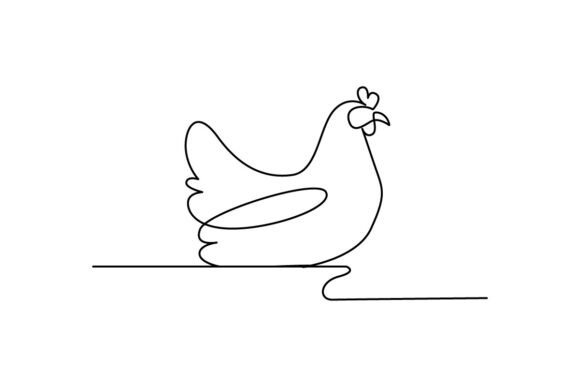
Hen Continuous Line Art for Creative Workflow Integration
Hen Continuous Line Art is a unique form of decorative design that uses a single, unbroken line to create intricate and elegant illustrations. This style is particularly popular in minimalist vector artwork, where simplicity meets sophistication. The absence of color or shading allows the line itself to become the focal point, making it ideal for a wide range of creative applications.
When integrated into a broader workflow, Hen Continuous Line Art can serve as a powerful tool for visual storytelling, branding, and graphic design. Its clean aesthetic makes it suitable for both digital and print media, offering versatility across different platforms and projects.
Understanding Hen Continuous Line Art
At its core, Hen Continuous Line Art is a method of drawing where the entire image is created using a single continuous stroke. This technique requires careful planning and precision, as any mistake or break in the line can disrupt the overall composition. The result is a cohesive and visually appealing design that emphasizes structure and flow.
This type of art is often used in vector illustration, where scalability and clarity are essential. The white background common in these designs enhances the visibility of the line work, making it an excellent choice for logos, icons, and other graphical elements that need to be adaptable across various sizes and formats.
Applications in Creative Projects
Hen Continuous Line Art can be incorporated at multiple stages of a creative project. Before starting a design, it can help visualize ideas and establish a clear direction. During the execution phase, it serves as a reference for maintaining consistency and accuracy. After the project is complete, it can be used for final touches or as part of a larger visual identity system.
For example, in a branding initiative, Hen Continuous Line Art can be used to create a signature emblem that represents the brand's values and personality. In a marketing campaign, it can be applied to social media graphics, posters, or packaging to maintain a cohesive look across all touchpoints.
Integration with Other Tools and Methods
Hen Continuous Line Art works well with other design tools and methods, especially when combined with digital illustration software like Adobe Illustrator or Procreate. These platforms allow for precise control over the line work, enabling artists to refine details and adjust compositions efficiently.
It also complements traditional sketching techniques, providing a structured approach to drawing that can be adapted to different styles and mediums. By blending hand-drawn elements with digital enhancements, creators can achieve a balance between organic creativity and technical precision.
Practical Implementation Tips
To effectively use Hen Continuous Line Art in your workflow, start by defining the purpose of the design. Whether it’s for a logo, a pattern, or a standalone piece, having a clear objective will guide your creative decisions. Next, plan the layout carefully, considering how the line will move through the composition and what elements need to be emphasized.
When working digitally, use layers to separate different parts of the design, allowing for easier adjustments without disrupting the entire piece. For physical drawings, practice on scrap paper first to get a feel for the flow and pressure needed to maintain a consistent line.
Workflow Examples and Use Cases
One practical use case is in the creation of custom illustrations for websites or apps. By using Hen Continuous Line Art, designers can develop icons and graphics that align with the site’s overall aesthetic while maintaining a high level of detail and clarity. This approach ensures that the visuals remain recognizable even at smaller sizes.
Another example is in the development of educational materials. Teachers and content creators can use this style to produce engaging infographics, diagrams, or illustrations that simplify complex concepts. The minimalistic nature of the art helps keep the focus on the information being presented, making it easier for learners to absorb and retain knowledge.
Factors to Consider for Long-Term Use
When incorporating Hen Continuous Line Art into your long-term workflow, consider factors such as preparation, compatibility, and usability. Proper preparation involves setting up the right tools and understanding the limitations of the medium. Compatibility refers to how well the design integrates with other assets, such as fonts, colors, and layouts.
Usability is also important, especially if the artwork will be used across multiple platforms or shared with others. Ensuring that the file formats—such as EPS and JPG—are appropriate for the intended use helps maintain quality and accessibility. Additionally, organizing your files systematically can save time and reduce errors during future edits or updates.
Enhancing Efficiency and Consistency
Efficiency in using Hen Continuous Line Art comes from developing a routine and refining your skills over time. As you become more familiar with the technique, you’ll be able to complete designs faster while maintaining a high standard of quality. Consistency is key, especially when working on projects that require multiple illustrations or repeated elements.
To maintain consistency, create a set of guidelines or templates that outline the preferred style, line thickness, and composition rules. This not only streamlines the design process but also ensures that all pieces fit together cohesively, reinforcing the overall visual identity of the project.
Quality Control and Final Output
Before finalizing any Hen Continuous Line Art design, conduct a thorough review to check for any inconsistencies, errors, or areas that need improvement. Zooming in on the artwork can reveal small details that might be overlooked at a glance. It’s also helpful to view the design in different contexts, such as on a screen or printed material, to ensure it looks good in all scenarios.
Once the design is complete, export it in the required formats, such as EPS for scalable vector graphics and JPG for raster-based use. Keeping backups of the original files ensures that you can make changes or reuses the artwork in the future without losing quality or detail.