Arrow Continuous Line in Workflow Design
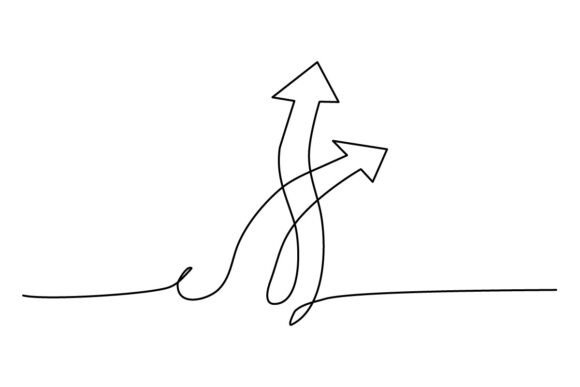
The Arrow Continuous Line is a design concept that represents a seamless flow of movement, direction, and purpose. It is often used in visual communication to guide attention, illustrate progression, or symbolize growth. When paired with the continuous line design of two arrows pointing up, it creates a powerful visual metaphor for upward motion, improvement, and forward momentum. This style is particularly effective when used as a single line decorative element on a white background, offering clarity, simplicity, and elegance.
This design can be applied across various industries, from branding and marketing to education and personal development. Its clean aesthetic makes it ideal for digital assets such as EPS, SVG, and JPG formats, allowing for flexibility in use across different platforms and mediums.
Understanding the Concept of Arrow Continuous Line
The Arrow Continuous Line is more than just a visual motif—it’s a tool for structuring ideas and processes. It represents the idea of an unbroken path, emphasizing continuity and connection. In workflow design, this concept can help visualize steps, transitions, and outcomes, making complex processes easier to understand and manage.
When two arrows point upward in a continuous line, they suggest a journey of progress. This could represent a business strategy, a learning curve, a creative process, or even a personal goal. The design reinforces the idea of movement and aspiration, making it a valuable asset in both conceptual and practical contexts.
By integrating this design into your work, you can create a visual language that supports clarity, focus, and intention. Whether you're planning a project, designing a presentation, or organizing your daily tasks, the Arrow Continuous Line offers a way to structure and communicate your goals effectively.
Applications in Different Workflows
The versatility of the Arrow Continuous Line makes it applicable in a wide range of workflows. Here are some common scenarios where it can be useful:
- Project Planning: Use the design to map out key milestones, ensuring a clear path from start to finish.
- Marketing Campaigns: Incorporate the arrow design into infographics, social media content, or website layouts to highlight customer journeys or conversion funnels.
- Educational Materials: Visualize learning objectives, curriculum pathways, or skill development stages using the continuous line format.
- Business Strategy: Represent growth trajectories, team structures, or operational flows with a simple yet impactful visual.
- Personal Development: Apply the concept to track progress, set goals, or outline daily routines in a structured way.
Each of these applications benefits from the clarity and simplicity of the Arrow Continuous Line. It allows for easy interpretation, making it an excellent choice for both internal and external communication.
Integration with Other Tools and Methods
The Arrow Continuous Line works well alongside other planning and visualization tools. For instance, it can complement mind mapping techniques, Gantt charts, or Kanban boards by providing a visual cue for direction and flow. When combined with color coding, typography, or iconography, it enhances the overall effectiveness of the design.
In digital environments, the design can be exported in multiple formats—such as EPS, SVG, and JPG—to ensure compatibility with different software and platforms. This flexibility allows for seamless integration into presentations, websites, mobile apps, or printed materials.
Additionally, the design can be adapted to fit different styles and themes. Whether you’re working on a minimalist layout or a more elaborate composition, the Arrow Continuous Line remains a consistent and recognizable element that supports the overall message.
Practical Implementation Tips
To make the most of the Arrow Continuous Line in your workflow, consider the following tips:
- Define the Purpose: Before incorporating the design, clarify its role in your project or process. Is it meant to guide users, illustrate a concept, or reinforce a message?
- Keep It Simple: Avoid overcomplicating the design. The strength of the Arrow Continuous Line lies in its minimalism and clarity.
- Use Consistently: Apply the design consistently across your materials to maintain a cohesive visual identity.
- Test for Usability: Ensure the design is easily interpretable by your target audience. Conduct user testing if necessary.
- Optimize for Different Formats: Export the design in high-quality formats like EPS and SVG for scalability, and JPG for quick sharing or printing.
By following these guidelines, you can integrate the Arrow Continuous Line into your workflow without disrupting existing processes or aesthetics.
Observations on Long-Term Use
Over time, the Arrow Continuous Line can become a foundational element in your design toolkit. Its adaptability and simplicity allow it to evolve with your needs, making it a valuable resource for both short-term projects and long-term strategies.
One key consideration is consistency. As you apply the design across different platforms and contexts, maintaining a uniform style will enhance recognition and credibility. This is especially important in branding, where visual elements must align with overall messaging and values.
Another observation is the importance of quality control. When using the design in professional settings, ensure that all versions—whether digital or print—are accurate and visually appealing. This includes checking resolution, color accuracy, and file integrity before finalizing any output.
Finally, consider how the Arrow Continuous Line can support your ongoing goals. Whether you’re tracking progress, refining processes, or communicating ideas, the design can serve as a constant reminder of direction and purpose.
Conclusion
The Arrow Continuous Line is a powerful visual tool that can enhance clarity, direction, and purpose in a variety of workflows. When paired with the continuous line design of two arrows pointing up, it becomes a compelling representation of growth, movement, and aspiration. By understanding its applications, integrating it effectively, and maintaining consistency, you can leverage this design to improve your planning, execution, and communication efforts.